


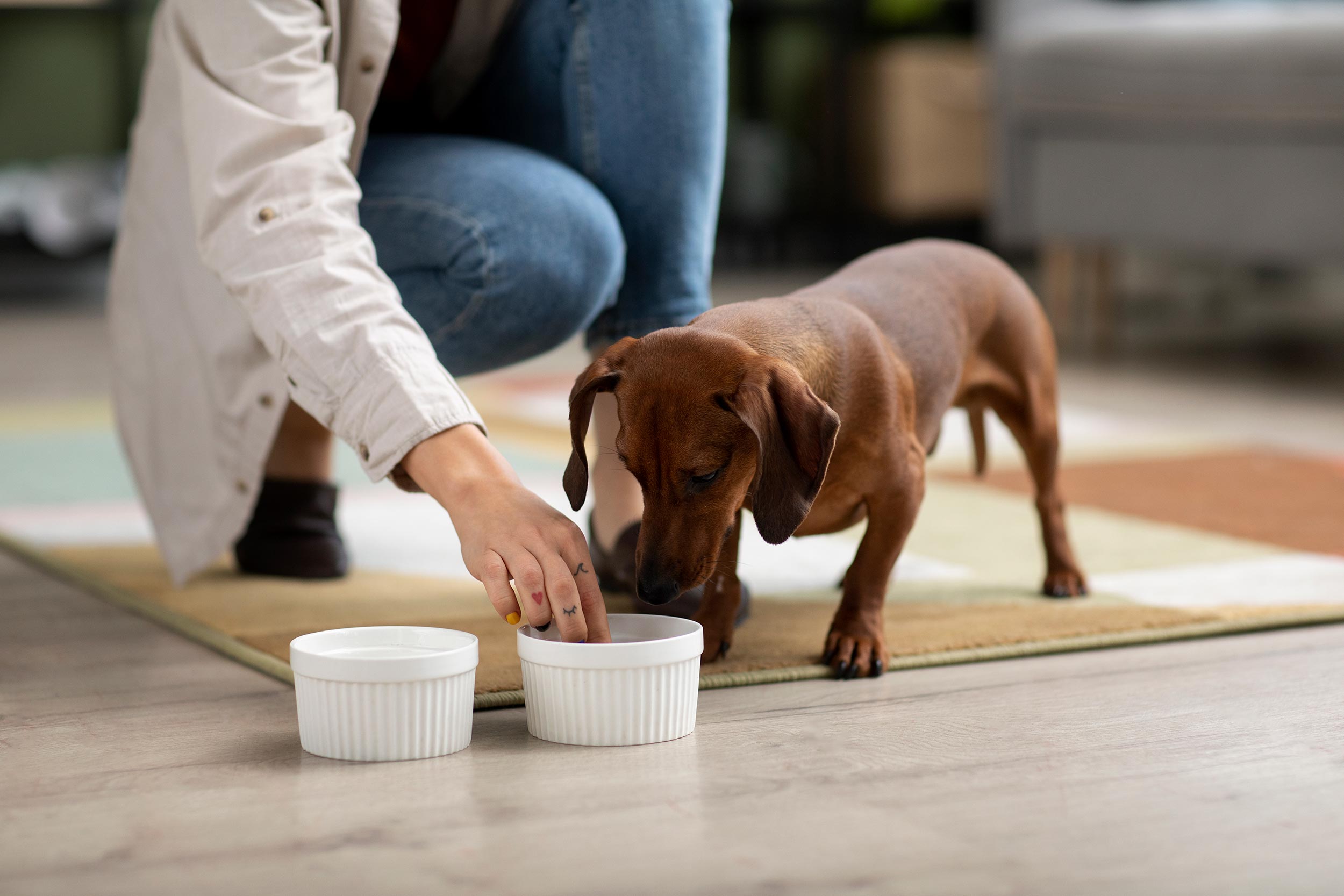
Understanding Resource Guarding
Hearing your sweet, loving dog suddenly emit a low growl when you walk past their food bowl can be incredibly jarring. Many owners feel betrayed or frightened when their pet displays food aggression. However, from a canine perspective, this behavior—known clinically as resource guarding—is a natural, albeit undesirable, survival instinct.
Food aggression is a complex behavioral issue that requires careful management. It is crucial to understand that a dog guarding their food is not being “dominant” or “spiteful”; they are acting out of fear and anxiety that their valuable resource is going to be taken away.
This article explores the factual causes of this behavior and outlines immediate, non-medical management strategies to ensure safety in your home.
Why Dogs Guard Their Food (The Facts)
-
Evolutionary Instinct: In the wild, animals that successfully guarded their food survived to pass on their genes. For some dogs, this instinct is simply closer to the surface.
-
Previous Scarcity: Dogs that experienced true hunger or had to compete for food in their past (such as strays or dogs from overcrowded hoarding situations) are highly prone to guarding behavior.
-
Learned Behavior (Human Error): Ironically, well-meaning owners often cause food aggression. If you repeatedly mess with your dog’s food, stick your hands in their bowl “to show them who is boss,” or take high-value items away from them to “test” them, you are teaching them that humans approaching means they lose their food. Their anxiety increases, and they begin to guard.
-
Underlying Medical Issues: Sudden onset of aggression can sometimes be linked to pain, dental disease, or neurological issues. A veterinary check-up is always the first step.
Immediate Management: Safety First
If your dog displays food aggression, your primary goal is to prevent the behavior from being practiced and to keep humans (especially children) and other pets safe. Do not attempt to punish or physically dominate a guarding dog, as this typically escalates the aggression and reinforces their fear.
-
Never Take the Food Away: If your dog is eating, leave them alone. Do not test them.
-
Isolate Mealtimes: Feed the dog in a completely separate, low-traffic area. Use a crate with the door closed, a laundry room, or a secure bedroom. The dog should feel 100% secure that no one is going to approach them while they eat.
-
Manage Empty Bowls: Some dogs guard the empty bowl or the area where they are fed. If this is the case, pick up the bowl the moment they walk away from it, when they are no longer focused on the area.
The Role of Predictability and Routine
Anxiety is the root of resource guarding. You can lower a dog’s general anxiety around food by making mealtimes highly predictable. If they know exactly when food happens, and that they will be safely isolated to eat it, the panic begins to subside.
In a multi-person household, inconsistent feeding times or accidental missed meals can trigger a guarding dog’s anxiety. Download ifedthepet.app today to establish a bulletproof routine. When everyone logs the exact feeding times, you create a reliable, predictable schedule that helps your dog feel secure, knowing their next meal is guaranteed.
(Note: For long-term resolution of resource guarding, we strongly recommend consulting a certified veterinary behaviorist or a positive-reinforcement trainer who specializes in modification protocols like counter-conditioning.)
