


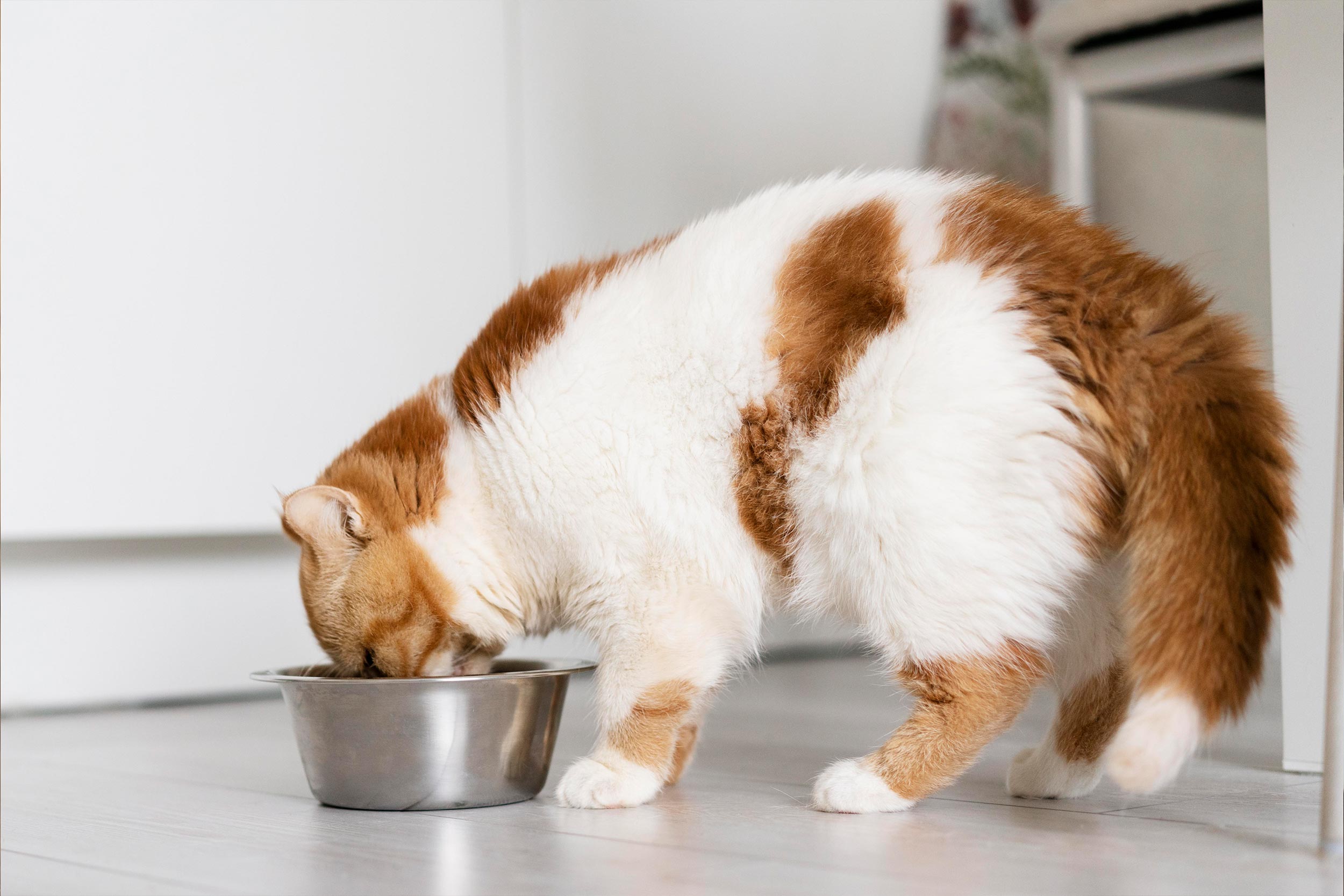
Kibble vs. Canned: The Feline Feeding Debate
You have entered the cat food aisle, and the choices are overwhelming. In one section, mountains of dry kibble bags promise convenience and “dental benefits.” In the adjacent section, hundreds of canned wet foods offer hydration and savory flavors. Which one is truly better for your feline companion?
This is not a simple question of “better” or “worse.” Both high-quality dry and wet cat foods can provide complete and balanced nutrition (Article 7). However, they have vastly different physical and nutritional properties that significantly impact feline physiology, hydration, and weight.
This article provides an objective, fact-based comparison of dry versus wet cat food to help you make an informed decision.
Key Difference 1: Moisture Content (Critical Fact)
This is the single most important difference.
-
Dry Food: Typically contains only 10% water.
-
Wet Food: Typically contains 75% or more water.
Feline Thirst Drive (The Science): Cats evolved as desert animals, naturally obtaining most of their hydration from their prey (which is ~70-75% water). Consequently, cats have a remarkably low thirst drive compared to dogs. Cats eating a purely dry diet seldom drink enough water to compensate for the lack of moisture in their food, leading to chronic mild dehydration. This is a significant risk factor for unique feline health conditions, specifically lower urinary tract issues (like crystals or stones) and chronic kidney disease.
Veterinary consensus increasingly favors incorporating wet food into a cat’s diet primarily for this hydration benefit.
Key Difference 2: Calorie Density and Weight Management
-
Dry Food: Extremely calorie-dense (the “granola bar” of cat food). Small volume scoops contain large amounts of energy. This makes it incredibly easy to overfeed, especially if free-feeding (Article 9), and a primary contributor to feline obesity.
-
Wet Food: Much lower calorie density per volume (the “soup” of cat food). The high water content provides volume and a sense of “fullness” (satiety) without excess calories.
Wet food is often necessary for feline weight loss plans because it provides satisfying portions at a reduced calorie level.
Key Difference 3: Dental Health (The Common Myth)
There is a widespread belief that the “crunch” of dry kibble helps clean teeth.
-
Fact: For average commercial kibble, this is largely a myth. Standard kibble is small, and cats often swallow it whole or shatter it easily without significant chewing. It has minimal effect on plaque reduction at the gumline, where dental disease starts.
-
(Exception: Specific veterinary dental prescription diets are formulated with a unique larger kibble size and fiber matrix that creates a mechanical brushing action. These are proven effective).
Conclusion: A Balanced Approach
Unless your veterinarian has directed a specific type for a medical condition, the “best” food is one that is AAFCO balanced, high-quality, and that your cat will eat. Given the hydration risks of a dry-only diet, many veterinarians recommend a combined approach: scheduled wet food meals supplemented with measured amounts of dry kibble.
Coordinate the Combo to Prevent Obesity
Combining wet and dry food is fantastic for hydration and flavor, but it is a complex balancing act in a busy home. If one person feeds the wet meal and another fills the dry bowl, your cat will easily consume double their target calories.
Download ifedthepet.app today and bring clarity to your household. Everyone can instantly log every wet and dry portion, ensuring the multi-person coordination necessary to maintain your cat’s ideal weight while maximizing the nutritional benefits of both types.
