


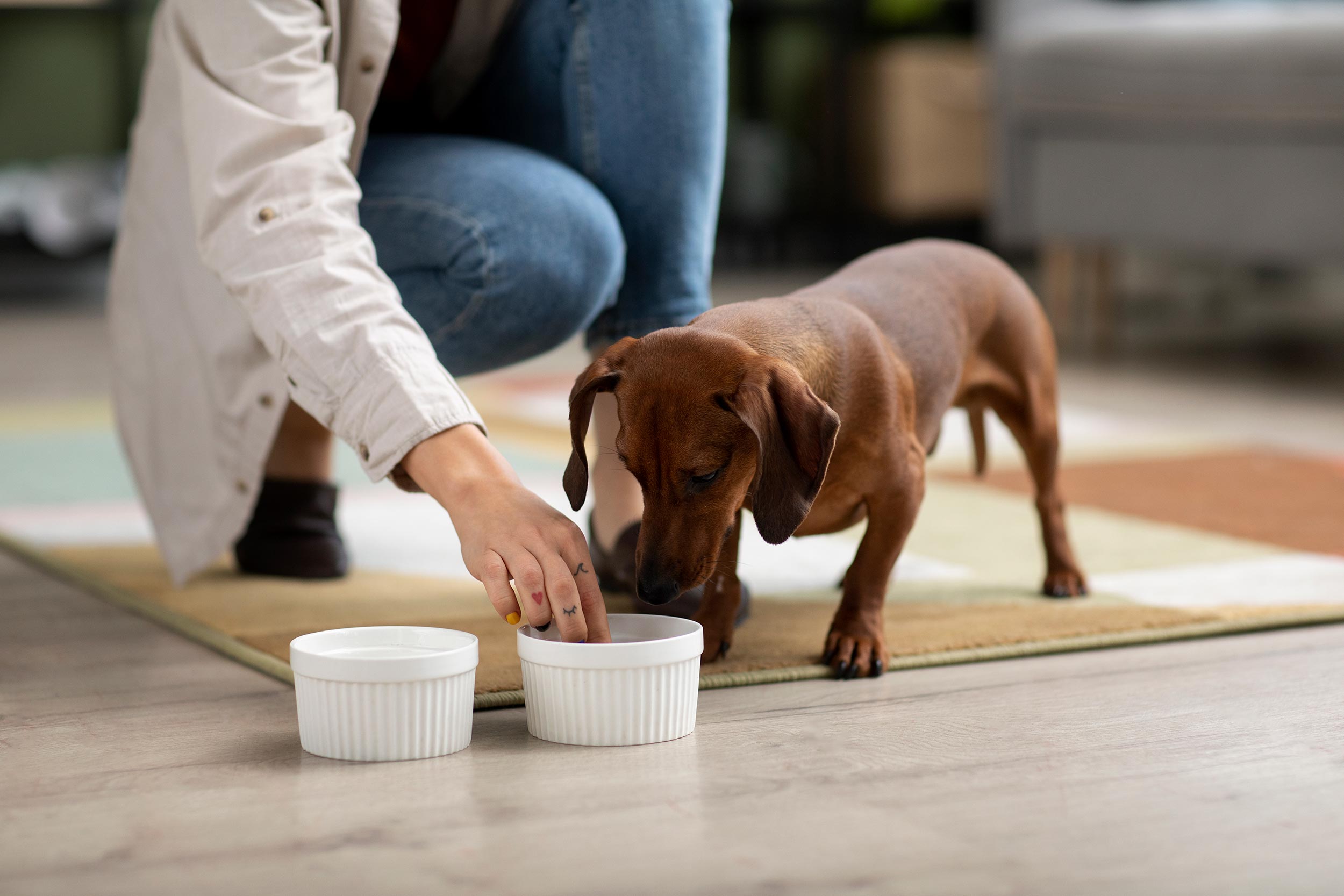
Accidental Double-Feeding: A Common Household Dilemma
It’s 7:30 PM. Your golden retriever is giving you those “I’m starving” eyes, sitting patiently by his bowl. You feel guilty, but you have a strict schedule. He ate at 6 PM. So, why is he acting so hungry?
Wait… Did he eat at 6 PM? You were stuck on a conference call, and your partner usually feeds him if you are busy. But your partner has been traveling. Did your teenager feed him? Now, confusion sets in. Is he truly hungry, or is he expertly manipulating you for a second dinner?
This scenario is incredibly common in multi-person households, and accidental double-feeding is a persistent issue for pet owners. Miscommunication is the primary culprit, often leading to unwanted weight gain for your pet and unexpected grocery expenses for you. When multiple caregivers—spouses, roommates, children, or pet sitters—are involved, “Who fed the pet?” becomes a high-stakes question.
Fortunately, there are several proven strategies you can use to put an end to double-feeding and restore clarity to your home.
1. Establish a Single “Head Feeder”
The simplest (but not always most practical) solution is to designate one person as the sole administrator of all meals. This person is responsible for every breakfast, dinner, and scheduled snack. If they are unavailable, they are responsible for explicitly delegating the task. While this provides the ultimate level of clarity, it places a significant burden on one person and is often impossible to maintain long-term in a busy family environment.
2. Use Visual Indicators (The Analog Method)
For households that need more flexibility, visual cues are a step up. You can create a simple binary system. For example:
-
The Bowl Flip: After your pet is fed, wash the empty bowl and set it down upside down. The next person to walk by sees the flipped bowl and knows the meal is complete. When the next mealtime arrives, the bowl is flipped right-side up and filled.
-
The Sticker Chart: A classic whiteboard or simple paper calendar on the fridge where each person puts a checkmark, sticker, or initial immediately after feeding.
Why these often fail: These methods rely heavily on the caregiver remembering to perform a second action (flipping the bowl or marking the chart) and are prone to being missed during the chaos of a busy morning or evening.
3. Implement the Shared Digital Log (The Ultimate Solution)
The modern, seamless, and most reliable way to prevent accidental double-feeding is a shared digital log. In a world where families share digital calendars, notes, and grocery lists, it makes sense to extend this technology to pet care.
The benefits of a digital logging app are clear:
-
Real-Time Syncing: When one person in the house logs a meal, every other member’s device updates instantly. There is no guessing game.
-
Accountability: The log shows not just that the pet was fed, but precisely when and potentially who performed the action.
-
Historical Data: It provides a valuable history of feeding consistency that can be crucial to spot patterns or share with your veterinarian if your pet has dietary concerns.
While manual visual systems can work with flawless execution, miscommunication will eventually slip through. A shared digital tool specifically designed for this purpose eliminates the ambiguity.
Simplify Your Routine with ifedthepet.app
Tired of the “Did the dog eat?” guesswork? Our app, ifedthepet.app, is the solution you’ve been looking for. Designed for multi-caretaker households, it allows everyone to log meals instantly from their own device. One tap from the breakfast feeder means the dinner feeder knows they are up next.
Say goodbye to accidental overfeeding, miscommunication, and anxiety. Download ifedthepet.app today and bring consistency and clarity to your pet’s feeding routine.
